Nimo Infinity
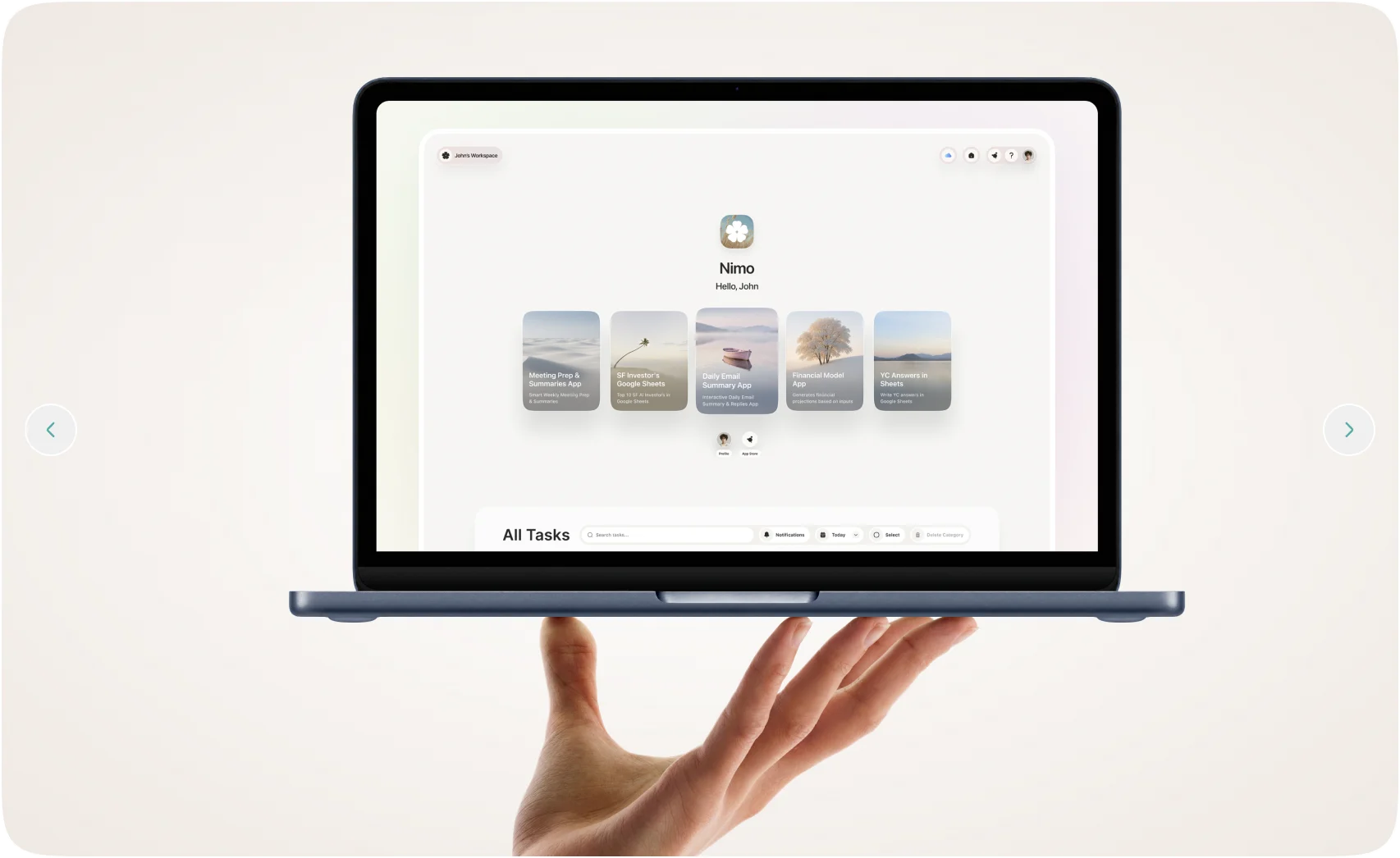
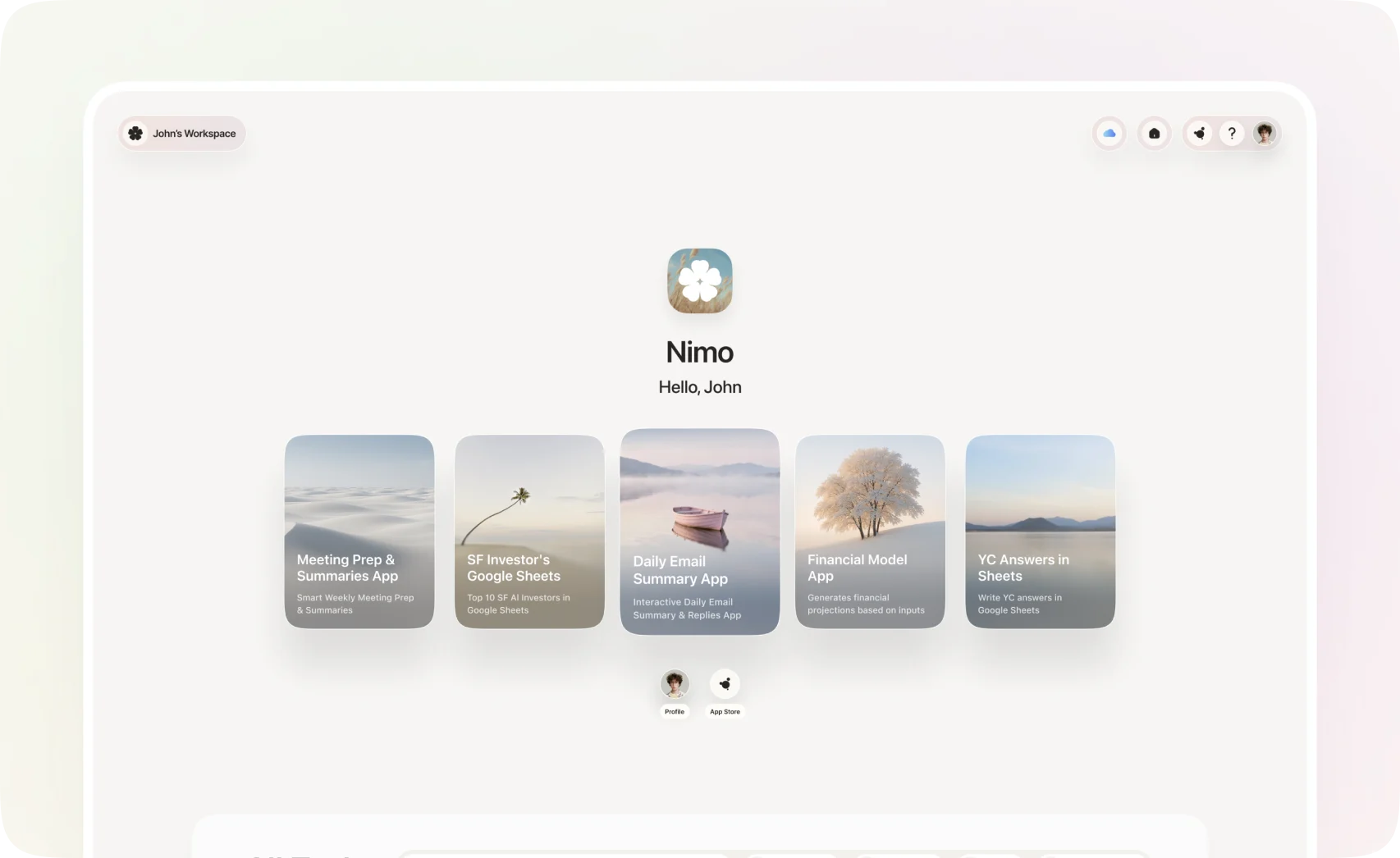
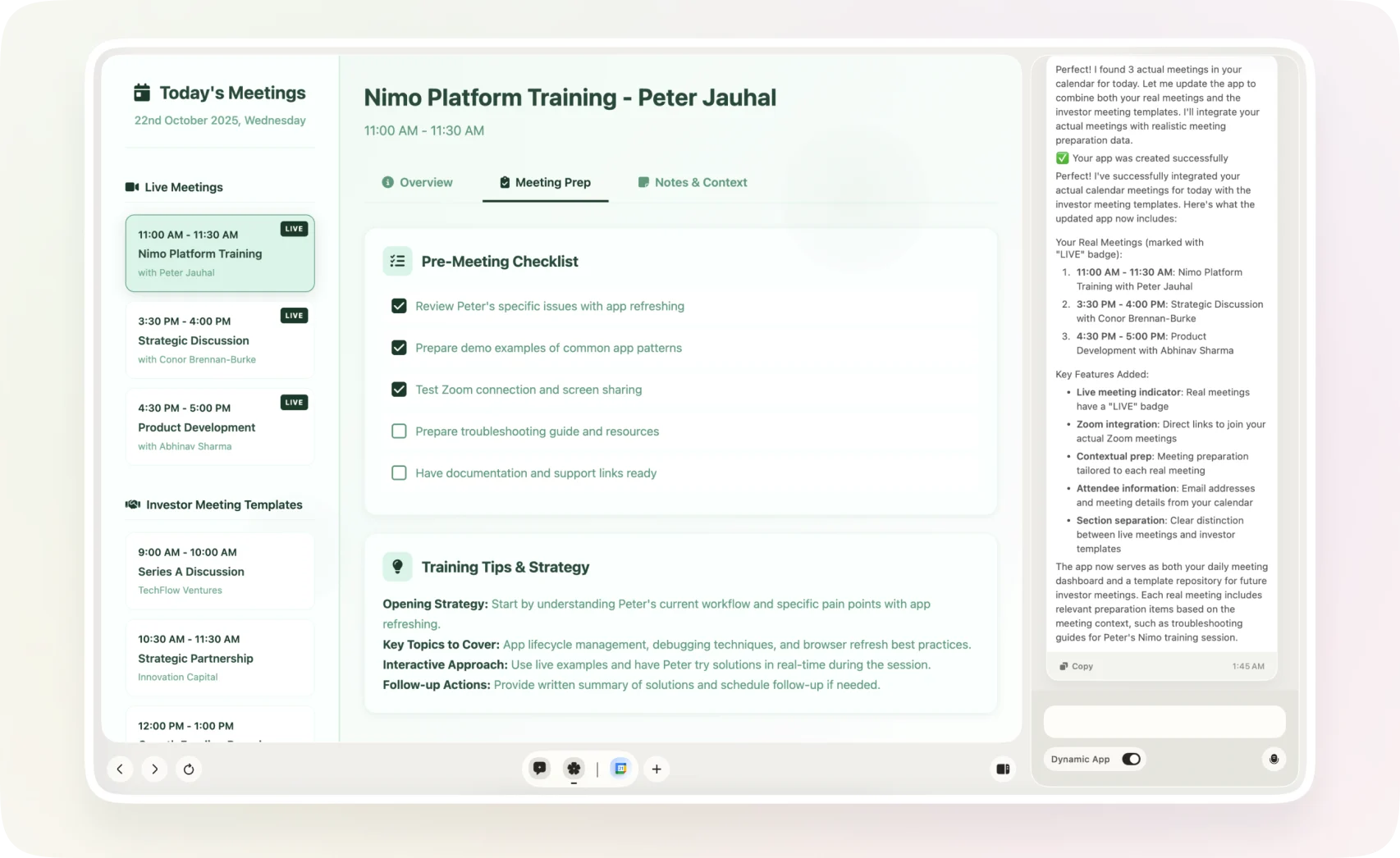
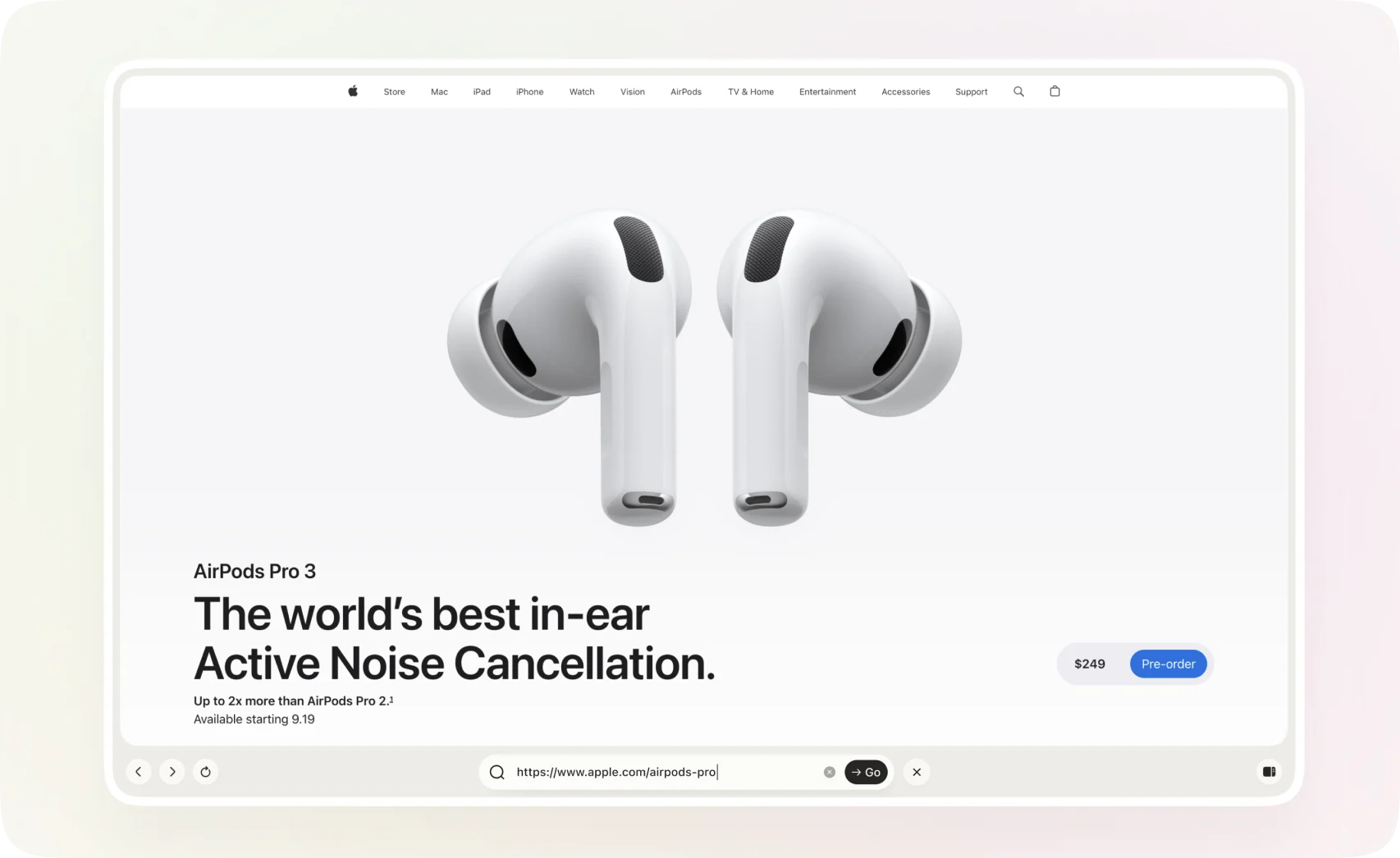
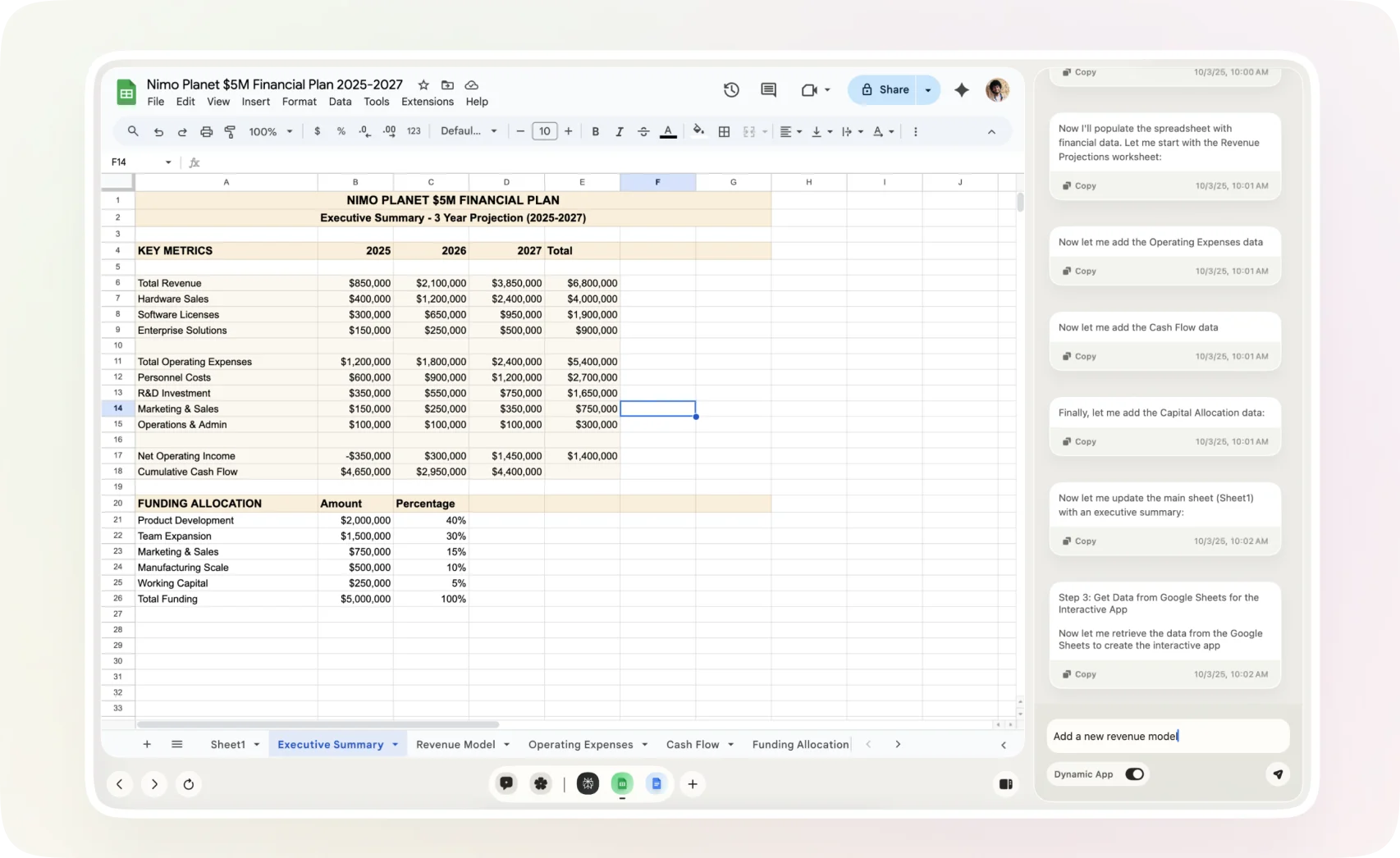
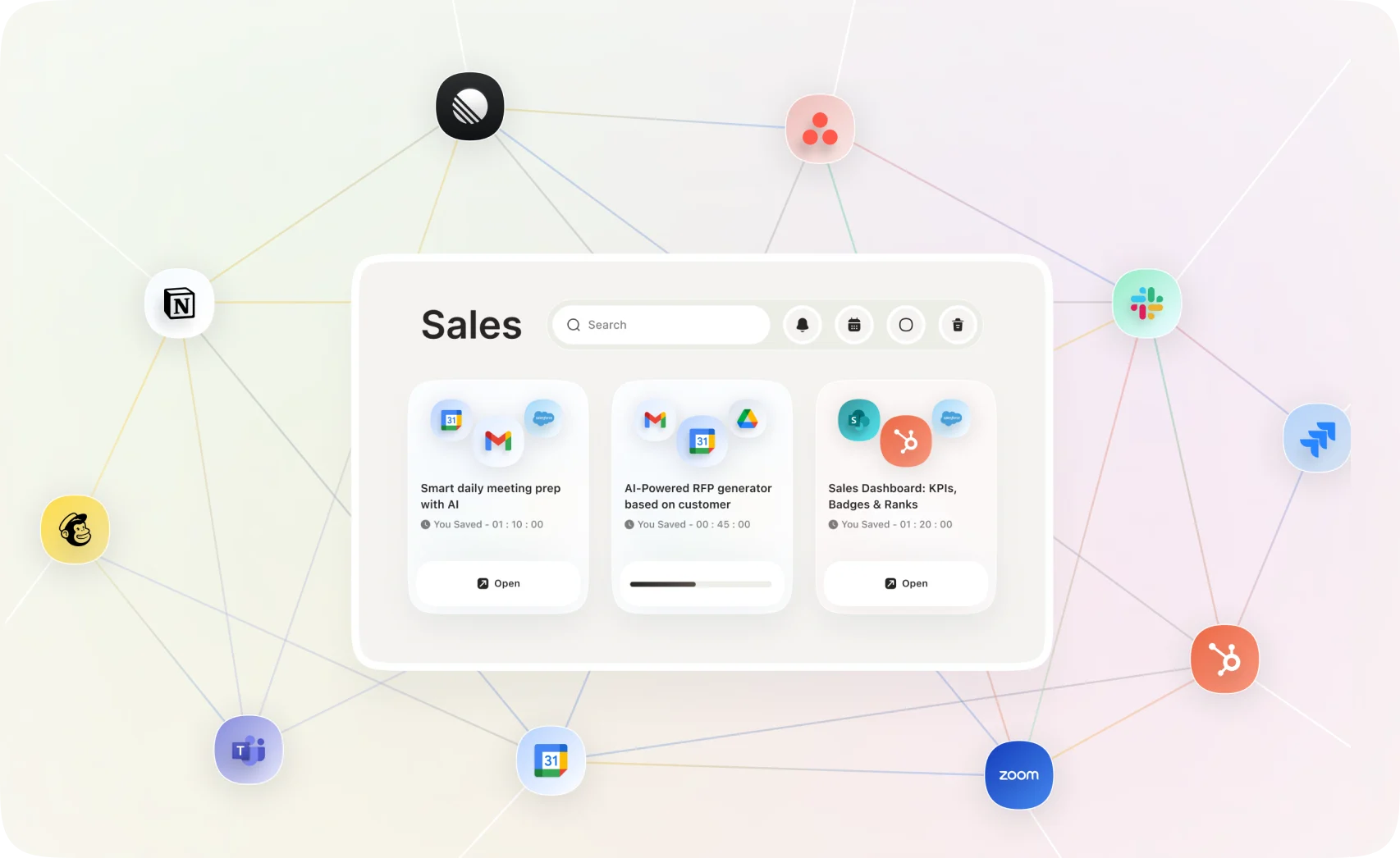
Nimo Infinity is an intelligent workspace that unifies AI, applications, and user context into one connected canvas. It brings conversations, tasks, and applications together in a single experience, reducing context switching and helping users stay focused.
Bringing AI into your everyday workflow.
AI has transformed how we work, but the experience is still scattered across different tools and interfaces. Constantly switching between AI assistants, documents, browsers, and productivity apps creates friction and breaks focus. The goal was to bring AI directly into the workflow—creating a connected workspace that reduces context switching, simplifies complex tasks, and helps people work more naturally.
A more natural way to work with AI.
This was a collaborative team effort focused on creating a workspace that feels familiar while introducing a more natural way of interacting with AI. As part of the design team, I contributed to shaping an intelligent canvas that brings conversations, applications, and workflows into one connected workspace; dynamic application experiences that adapt to different tasks; reusable AI interaction patterns for consistency across the platform; and a modular design system covering components, typography, spacing, iconography, color, and motion. Together, we focused on reducing friction, improving clarity, and making AI feel like a natural extension of the user's everyday workflow.
A new interaction model for AI-powered productivity.
Nimo Infinity introduced a new interaction model for AI-powered productivity, replacing fragmented workflows with a unified intelligent workspace. The modular design system accelerated product development, established a consistent user experience across the platform, and supported the successful launch of the product, which was recognized as Product Hunt's Product of the Day and Top 4 Product of the Week.
The future of AI isn't another chat interface.
Designing Nimo Infinity reinforced that the future of AI is not another chat interface, it's creating products where AI is seamlessly integrated into everyday work. The most valuable lesson was learning how thoughtful interaction design, clear information architecture, and strong product thinking can make complex AI experiences feel simple, intuitive, and genuinely useful.